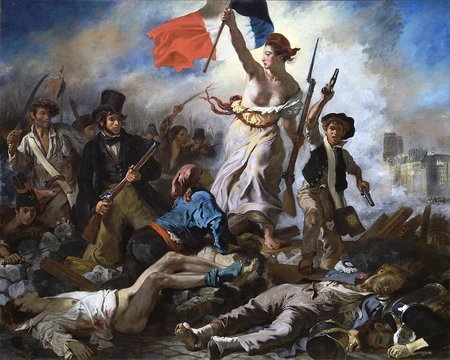
Israeli–Palestinian conflict
Ongoing conflict over land and self-determination in former Mandatory Palestine.

Nizzan Cohen · CC BY 4.0
The Israeli–Palestinian conflict is an ongoing military and political struggle over land and self-determination within the former territory of Mandatory Palestine. It involves key issues such as Palestinian refugees, Israeli occupation of the West Bank and Gaza Strip, the status of Jerusalem, Israeli settlements, borders, security, water rights, the permit regime, Palestinian freedom of movement, and the Palestinian right of return.
- started
- Late 19th century
- field
- Military and political conflict
- key_actors
- Israel, Palestinians, Hamas, British Empire, United Nations
- current_status
- Ongoing occupation and conflict
Lore & Background
The conflict has its origins in the rise of Zionism in late 19th-century Europe, which aimed to establish a Jewish state through colonization in Palestine. The 1917 Balfour Declaration by Britain promised support for a 'Jewish homeland' in Palestine. Following British occupation during World War I, Mandatory Palestine was established. The United Nations partition plan of 1947 was rejected by Arab leaders, triggering the 1947–1948 civil war and the 1948 Palestine war, during which Israel was founded and more than half of the Palestinian Arab population fled or were expelled, an event Palestinians call the Nakba.
Reader's Guide
The Israeli–Palestinian conflict remains one of the most intractable disputes of the modern era, with profound humanitarian and geopolitical consequences. The ICJ in July 2024 determined that Israel continues to illegally occupy the West Bank and Gaza Strip.
Did You Know?
- The conflict began with the rise of Zionism in late 19th-century Europe.
- The 1948 Palestine war resulted in more than half of the mandate's Palestinian Arab population fleeing or being expelled.
- In July 2024, the International Court of Justice determined that Israel continues to illegally occupy the West Bank and Gaza Strip.
Roots in National Awakening
The conflict's origins stretch back to the late 1800s, when the region then known as Palestine formed part of Ottoman Syria, governed by the Ottoman Empire for nearly four centuries. The population was predominantly Arab Muslim—farmers and Bedouin—with smaller communities of Christians, Druze, Circassians, and Sephardic Jews. Most Jews worldwide lived in eastern and central Europe. As antisemitism and persecution intensified across the continent, Jewish communities began actively discussing immigration to the Land of Israel. Zionism crystallized as a political movement in 1897, calling for a Jewish nation-state in Palestine as a haven and a site of self-determination. Simultaneously, Arab nationalism and Syrian nationalism were gaining traction in the region. The World Zionist Organization and the Jewish National Fund encouraged immigration and funded land purchases, both under Ottoman and later British rule. Arab leaders increasingly perceived Zionist ambitions as a direct threat, particularly as land acquisitions from Arab owners led to the eviction of tenant farmers, deepening a sense of dispossession among the local population.
The 1948 Turning Point and Displacement
The Balfour Declaration of 1917, issued by the British government, endorsed the concept of a Jewish homeland in Palestine and triggered a significant wave of Jewish immigration. After World War II and the Holocaust, international pressure intensified for a Jewish state, culminating in the creation of Israel in 1948. The war that preceded and followed the founding brought a profound demographic upheaval: hundreds of thousands of Palestinians were displaced from their homes. This mass displacement became a central wound of the conflict, and the territories that had absorbed much of the displaced population in 1948 would later become focal points of the dispute. The Palestinians have since sought to establish their own independent state in at least part of historic Palestine, while Israel points to border defense and Palestinian internal political violence as reasons a Palestinian state is not viable. A majority of UN member states recognize Palestine as independent, yet on the ground, Israel maintains effective control over the West Bank, and Gaza—though no longer under direct Israeli administration since 2005—remains under a blockade imposed by Israel and Egypt.
The 1967 War and Territorial Realities
The 1967 war marked a decisive shift in the conflict's geography. Israel expanded its borders to encompass, among other territories, the West Bank and the Gaza Strip—regions that in 1948 had absorbed a large share of the displaced Palestinian population. This territorial expansion reshaped the political landscape and entrenched the dispute over land. Today, the status of these territories remains one of the most intractable issues. Israel maintains effective control over the West Bank, where its settlements continue to be a major obstacle in any peace process. The Gaza Strip, while no longer under direct Israeli military control after 2005, has been subjected to a prolonged blockade by both Israel and Egypt, severely restricting movement and economic activity. The Palestinians' aspiration for an independent state in at least a portion of historic Palestine stands in tension with Israel's stated position that border security concerns and Palestinian internal political violence make a Palestinian state infeasible. The gap between these positions has persisted for decades, with the territorial question remaining unresolved.
The Stalled Peace Process
Over the decades, numerous rounds of peace negotiations have been attempted, yet a durable settlement has eluded all parties. The conflict has been punctuated by cycles of violence, including Palestinian political violence and Israeli military operations, each deepening mistrust. The United States and other nations have played mediating roles, though Israel regards Washington as a strategic ally rather than a neutral broker, complicating the diplomatic landscape. Several core obstacles remain stubbornly unresolved: the continued existence of Israeli settlements in the West Bank, the contested status of Jerusalem, and the ultimate fate of Palestinian refugees displaced in 1948 and beyond. The early violent incidents—such as the 1882 shooting in Safed and the 1886 clashes in Petah Tikva—foreshadowed a pattern of escalating tensions rooted in land disputes and national identity. By 1908, thirteen Jews had been killed by Arabs, and in the following five years, twelve Jewish settlement guards lost their lives, with settlers increasingly framing these events as expressions of Arab nationalism rather than mere banditry. These early flashpoints laid the groundwork for the protracted confrontation that continues to this day.
Gallery

Frequently Asked Questions
What is the Israeli–Palestinian conflict?
It is a long-running military and political dispute over who governs and controls the land that was once part of British Mandate Palestine. Both sides claim the territory as their homeland, and the struggle has produced decades of violence, displacement, and unresolved political questions.
When did the Israeli–Palestinian conflict begin?
Roots of the dispute trace back to the late 1800s, when Zionist immigration to Ottoman Palestine grew alongside rising Palestinian national consciousness. Tensions escalated sharply during the British Mandate period and have continued without a final settlement ever since.
What are the core issues in the Israeli–Palestinian conflict?
The main sticking points include the fate of Palestinian refugees and their right of return, the status of Jerusalem, Israeli settlements in the West Bank and Gaza, borders, water access, and restrictions on Palestinian freedom of movement. Security concerns and the broader question of self-determination for both peoples also remain central.
Who are the principal parties in the Israeli–Palestinian conflict?
The conflict involves the State of Israel, Palestinian political and military actors (including groups such as Hamas), and has historically involved the British Empire and the United Nations as external actors. Various Palestinian leadership bodies and international mediators have also played roles over the decades.
What is the current status of the Israeli–Palestinian conflict?
The situation remains unresolved, with Israeli military occupation of the West Bank and Gaza Strip still in place. Periods of intense violence continue to alternate with fragile diplomatic efforts, and no comprehensive peace agreement has been reached.
More in Revolutions And Conflicts 1-20
Spotted an error? Know more?
This is a living reference — every entry is fact-audited, and reader corrections feed straight into our audit queue. Suggest an edit · See this site's audit record